

Key Takeaways
- Cognitive activities can help older adults stay mentally engaged, socially connected, and emotionally active.
- Mental exercise supports focus, memory, routine, and confidence through consistent daily engagement.
- Word games, puzzles, and strategy games encourage problem-solving and concentration.
- Creative hobbies like painting, knitting, and journaling provide mental stimulation and emotional expression.
- Social interaction through clubs, conversations, and group activities plays an important role in cognitive wellness.
- Simple daily habits like reading, music, and regular conversations can help support long-term mental engagement.
Mental Activities That Support Your Cognitive Health
The brain stays active when you challenge it with new experiences and regular mental exercise. Just like your muscles need movement to stay strong, your mind benefits from activities that make you think, solve problems, and learn new things.
Keeping your loved one’s mind engaged through various activities can help them maintain mental sharpness and continue enjoying the things they love. The key is finding activities that match their interests and abilities while providing just enough challenge to keep their brain working. Don’t worry about perfection or performance—helping your loved one continue participating in activities that encourage connection, curiosity, and confidence is key to their cognitive health and overall quality of life.
Why Mental Exercise Matters for Your Brain Health
Mental stimulation helps keep the mind engaged as people age. Activities that involve memory, focus, conversation, creativity, or problem-solving encourage older adults to stay involved in daily routines and social interactions. Even small forms of engagement throughout the day can help support confidence and emotional well-being. Consistency often matters more than complexity.
Mental exercise also gives older adults opportunities to maintain hobbies, routines, and relationships that are important to them. A favorite card game, book discussion, or creative hobby can provide both structure and enjoyment throughout the week. These activities can also create more opportunities for meaningful interaction with family members and friends, which offers its own list of benefits as well.
The Benefits of Cognitive Activities for Seniors
Cognitive activities support more than memory alone. They can help older adults stay socially connected, emotionally engaged, and mentally active through everyday experiences that feel enjoyable rather than overwhelming. Many activities also encourage routine, which can help create a greater sense of comfort and familiarity.
Regular cognitive activities offer many benefits to older adults, including:
- Supporting memory and concentration
- Encouraging social interaction
- Helping reduce boredom and isolation
- Promoting creativity and self-expression
- Creating healthy daily routines
- Encouraging confidence and independence
- Supporting emotional wellness and engagement
When activities are enjoyable and consistent, they are more likely to become part of a healthy long-term routine. Families often find that even small moments of engagement can help create meaningful opportunities for connection throughout the day.
The Best Cognitive Activities for Seniors
The best cognitive activities are usually the ones that feel approachable, enjoyable, and easy to participate in regularly. Different activities engage different parts of the brain, so variety can be helpful throughout the week. Many older adults also enjoy activities more when they involve social interaction or shared experiences with others.
Word Games and Puzzles
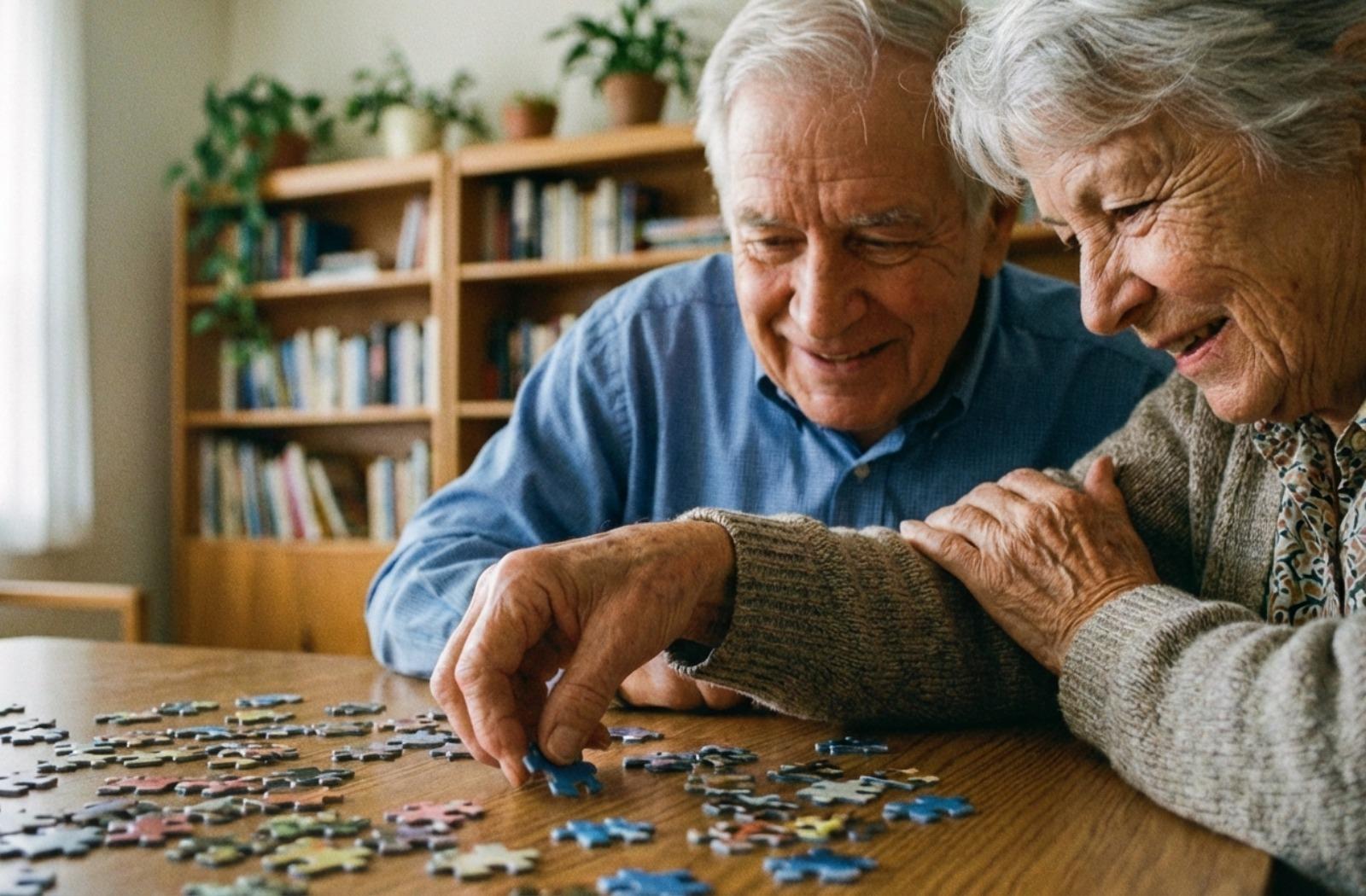
Crossword puzzles, word searches, Sudoku, and matching games can help older adults stay mentally engaged while encouraging focus and problem-solving. These activities are easy to adjust to one’s comfort, which makes them accessible for a wide range of abilities. Some people enjoy completing puzzles independently, while others prefer working on them with family or friends. Even short puzzle sessions can become a relaxing and rewarding part of the day.
Card Games and Strategy Games
Card games and strategy-based activities encourage concentration, planning, and memory recall. Games like bridge, chess, checkers, and dominoes also create natural opportunities for conversation and social interaction. Many older adults enjoy the familiar structure these games provide, especially when they are played regularly with others. Group games can also help create a stronger sense of routine and community.
Creative Hobbies and Crafts
Creative activities engage the mind in a different way by encouraging focus, imagination, and hands-on participation. Painting, knitting, scrapbooking, woodworking, and crafting projects can all provide meaningful mental stimulation while supporting fine motor skills. These hobbies often help older adults feel productive and accomplished without adding unnecessary pressure. Creative activities can also become calming outlets that support emotional wellness.
Reading, Journaling, and Storytelling
Reading books, writing in a journal, or sharing stories with loved ones can help older adults stay mentally and emotionally engaged. Reading encourages focus and comprehension, while journaling provides an opportunity for reflection and self-expression. Storytelling activities can also strengthen family bonds and encourage conversation across generations. These quieter activities are especially helpful for older adults who prefer more relaxed forms of engagement.

di
Simple Ways to Add Mental Exercise to a Daily Routine
Adding cognitive activities to a daily routine does not need to feel overwhelming. In many cases, small habits and familiar activities can provide meaningful mental engagement over time. Consistency and enjoyment are usually more important than trying to follow a strict schedule or complicated program.
To encourage a loved one to work more mental exercise into their routine, try recommending:
- Completing a daily crossword puzzle or word game
- Reading books, magazines, or short articles together
- Listening to music and discussing favorite songs or memories
- Participating in card games or board games with family
- Trying hands-on hobbies like painting, knitting, or gardening
- Staying physically active through walks or light exercise
- Scheduling regular conversations with friends and loved ones
The most effective activities are often the ones your loved one genuinely enjoys. Encouraging participation without pressure can help activities feel more natural, comfortable, and sustainable over time.
How Senior Living Can Support Your Loved One’s Cognitive Health
Structured routines, social opportunities, and engaging activities can all play an important role in supporting cognitive wellness. That’s why many senior living communities provide daily programs designed to encourage conversation, creativity, movement, and connection in ways that feel approachable and enjoyable. And here at The Enclave of Newell Creek, we’re proud to offer a wide calendar of many activities for each resident.
In our community, we understand how important cognitive wellness is to maintaining overall quality of life. We are committed to creating an environment where older adults can continue enjoying the routines, hobbies, and relationships that matter most to them. Schedule a tour at The Enclave of Newell Creek today to learn more about how our community supports cognitive wellness and daily engagement.